
Fortescue
Foundation
Igniting Conversations,
Valuing Tomorrow
MISSION
The Fortescue Foundation promotes rigorous discussion and research on political ideas, institutions, and the cultural conditions that shape public life.
lectures
The Fortescue Foundation seeks to cultivate a serious intellectual environment at the University of Oxford, promoting freedom of thought, open debate, and informed engagement with political and economic ideas. Our mission is to support emerging thinkers who interrogate established assumptions and explore how institutional frameworks, economic systems, and political authority shape public life. By fostering analytical rigour, interdisciplinary dialogue, and reflective inquiry, we aim to contribute to a more informed and resilient society capable of understanding and responding to contemporary challenges.
SOME OF OUR RECENT EVENTS
Lecture: Plato and Civitas with Dr Jordi Wiersma of the Pascal Institute
We hosted Dr Jordi Wiersma, President of the Pascal Institute (Leiden), for a lecture examining competing models of civic and intellectual life. Drawing on Plato’s account of “democratic man” in the Republic, Wiersma contrasted contemporary democratic individualism with the aristocratic ideal of self-discipline and excellence.
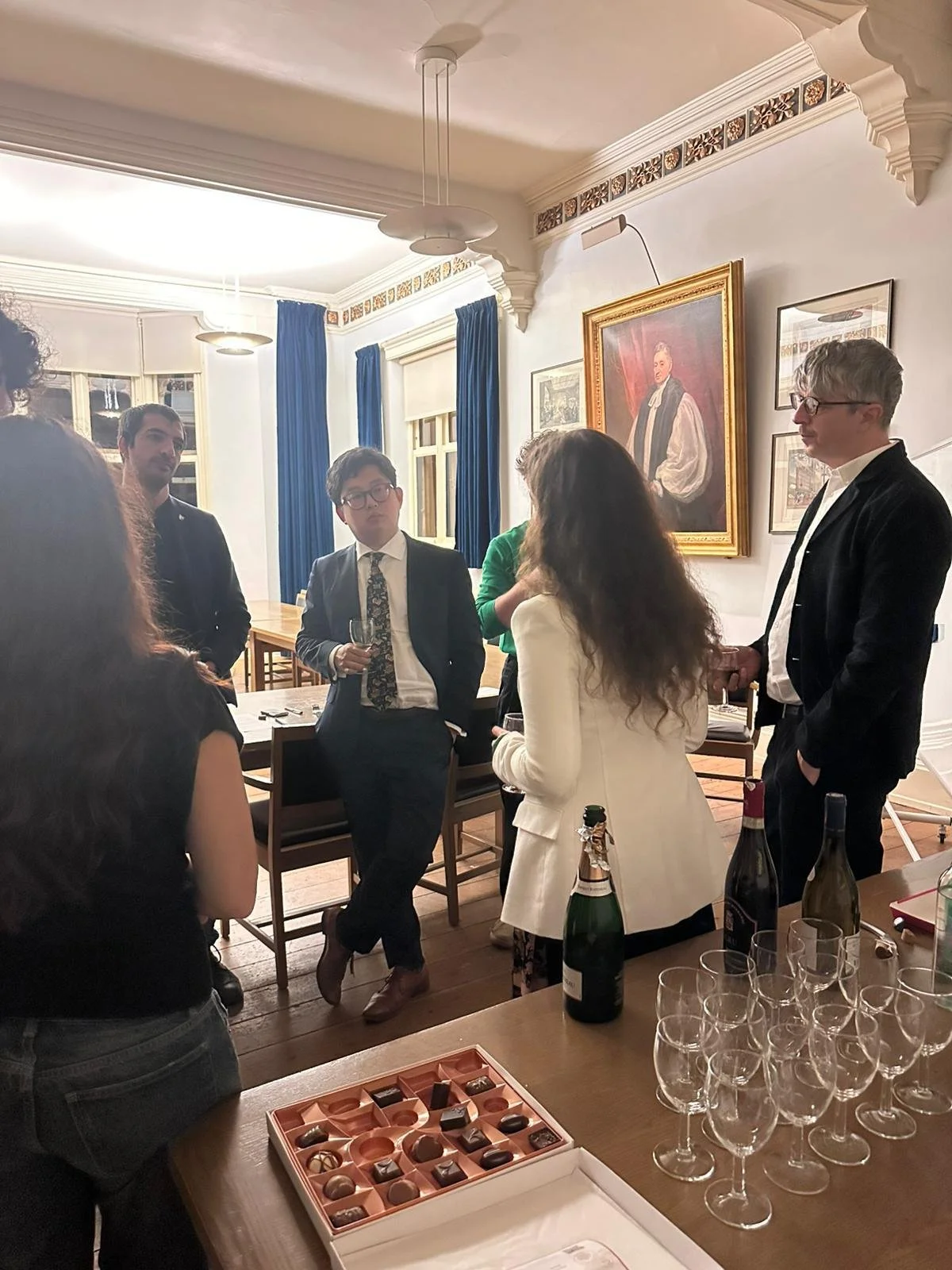
The lecture integrated insights from José Ortega y Gasset on “mass man,” as well as Giovanni Sartori’s critique of image-based politics in Homo Videns, to explore how technology and distraction erode sustained attention. The session concluded with a discussion of liberal education and the role of teachers in guiding students “upward” towards intellectual independence, invoking Plato’s cave as a metaphor for the difficult ascent from opinion to understanding.
The talk was followed by Q&A with students from Christ Church, New, Brasenose, Balliol, Wadham, and other colleges.
Event: Academic & Cultural Visit from the university of Warsaw
In February–March 2025, Fortescue Foundation welcomed a group of thirteen students from a Warsaw-based university for a study visit to Oxford focused on political ideas, institutional culture, and democratic public life in Europe. The visit formed part of an academic exchange programme designed to facilitate cross-border dialogue among young scholars on questions of citizenship, education, and civic responsibility.
Over several days, the visiting group explored key spaces of Oxford’s intellectual and institutional ecosystem, including:
• The Oxford Union, where discussions centred on the history of democratic debate, deliberation, and public speech
• Christ Church, examined as a case study in the historical entanglement of civic institutions, elite formation, and university culture
• The Bodleian Library, with attention to how archival and knowledge institutions shape collective memory and democratic accountability
Upcoming International Visit (university of Warsaw, 2026 Edition)

The programme integrated seminars, guided visits, and shared meals, creating opportunities for students from Oxford and Warsaw to discuss European political culture, higher education as a public good, and the socio-historical role of universities in forming civic actors.
A group lunch in Christ Church Hall provided a forum for informal debate on the future of democratic pluralism, the changing role of universities, and the tensions between tradition and social transformation in contemporary Europe.
The visit concluded with a farewell dinner, marking the close of a weekend of transnational academic exchange centred on political theory, institutional analysis, and mutual learning between students from both cities.
Following last year’s successful academic visit, a new delegation of students from the University of Warsaw will be returning to Oxford in 2026 for a programme of seminars, tours, and discussions. The visit will focus on the relationship between political ideas, institutional culture, and civic education, with attention to how universities form intellectual habits and shape public life.
The programme reflects an ongoing collaboration between student groups in Oxford and Warsaw, aimed at encouraging comparative perspectives on political thought, constitutional history, and the educational traditions of Europe.
Further details will be announced in due course.
